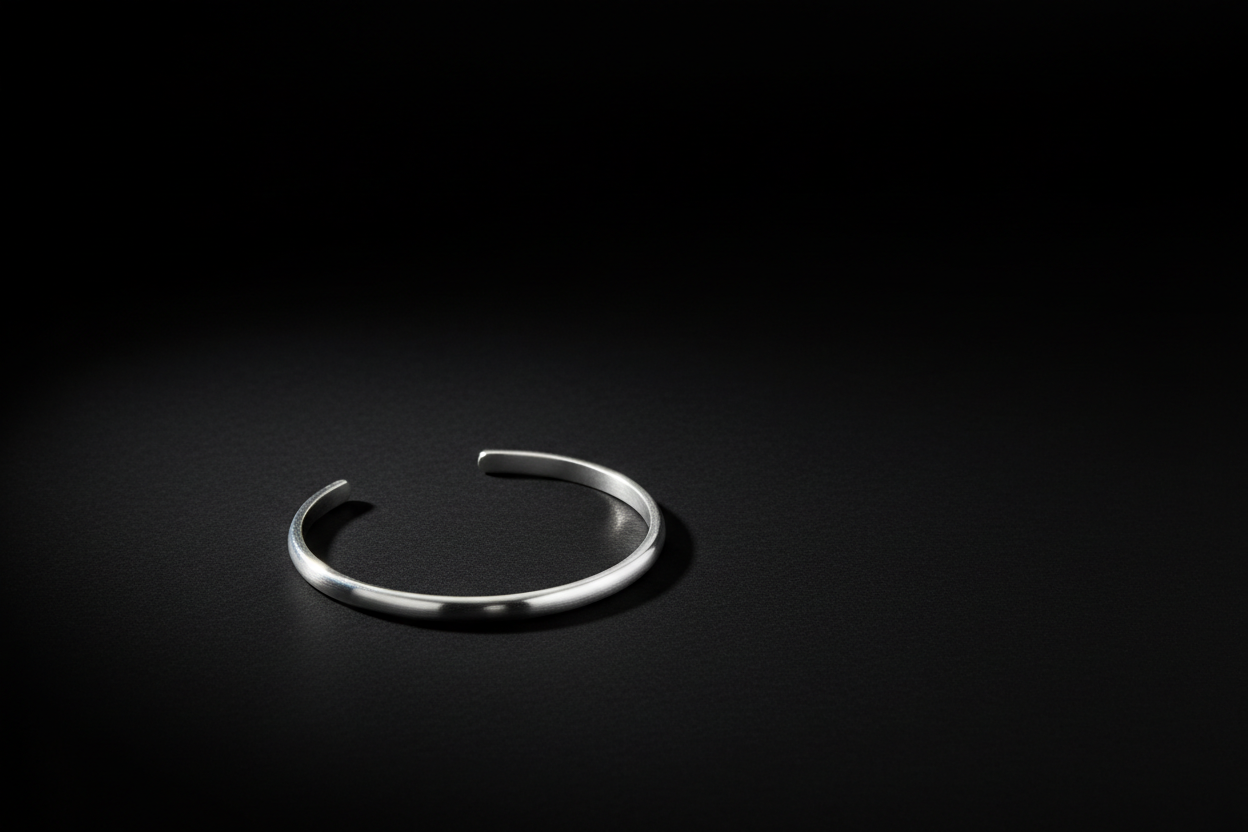
Solid silver vs. silver-plated: real differences
Two pieces of jewelry may look identical in a photo but be completely different in reality. The difference is almost always in the material: one is sterling silver, the other is silver-plated. Understanding the difference protects you from purchases that look good but aren't.
What is sterling silver?
Sterling silver — also called 925 silver or .925 silver — is an alloy composed of 92.5% pure silver and 7.5% other metals, usually copper, to give it hardness. The entire piece is made of this material, from the inside out. There are no layers, no core of another metal. What you see is what you get.
What is silver-plated?
Silver-plated is a piece made of another metal — usually brass, copper, or stainless steel — with a superficial layer of silver applied through an electrochemical process. This layer can be between 0.5 and 5 microns thick. At first glance, it is indistinguishable from sterling silver. Over time, it is not.
The differences that matter
Durability
Sterling silver lasts decades with minimal care. Silver-plated jewelry loses its surface layer with use, sweat, water, and cosmetic products. The time it takes depends on the thickness of the plating: from a few months to two or three years in the best case. Once the layer disappears, the base metal is exposed, and the piece changes color.
Skin reactions
Sterling 925 silver is generally well-tolerated by sensitive skin. Silver-plated, when it loses its layer, exposes the base metal — which can be brass or copper — and can cause reactions, green stains on the skin, or irritations. If a "silver" piece of jewelry has ever left a green mark on you, it was silver-plated.
Price
Silver-plated is significantly cheaper to produce. That's why many very low-priced jewelry pieces are plated even if they don't clearly state it. Sterling silver has a higher cost, but the price per wear over time is much lower: a piece that lasts ten years is always more cost-effective than three that last two.
How to identify it
Look for the "925" stamp engraved on the piece. If it doesn't have it, it's probably not sterling silver. You can also observe the edges and worn areas: in silver-plated jewelry, these areas often show the base metal first. And if the price is very low for what it seems to be, it's almost always plated.
Why Silver Status uses only sterling 925 silver
It's not a positioning decision. It's an honesty decision. A piece of jewelry that degrades in months is not jewelry — it's a consumer product. At Silver Status, every piece is made of certified sterling 925 silver, including marking and a guarantee of authenticity. What you buy today, you'll wear ten years from now.
If you want to know more about types of silver, read our article on 925 silver, fine silver, and sterling silver. And if you have doubts about whether a piece of jewelry you already own is real silver, discover how to identify it at home. Explore our collection of sterling 925 silver jewelry.