Can sterling silver get wet? What no one properly explains to you
It is one of the most searched questions about jewelry, and the answer is not a simple yes or no. 925 silver is water-resistant, but not all liquids are the same — and context matters. Here, we explain it precisely.
Water alone does not destroy 925 silver
Showering with your 925 silver jewelry on will not immediately ruin it. Tap water, by itself, does not corrode or deform silver. What it does do is accelerate surface oxidation over time, especially if the water contains chlorine — like tap water in many Spanish cities. The result is not structural damage, but a faster loss of shine than usual.
What does damage silver: the three real enemies
Pool chlorine. This is the worst. Chlorine reacts chemically with silver and can permanently stain it, especially in soldered areas or on polished pieces. Always remove your jewelry before entering a pool.
Seawater. Sea salt is abrasive and corrosive. Saltwater penetrates microcracks and accelerates metal degradation. If you wear jewelry at the beach, rinse it with fresh water afterward and dry it thoroughly.
Chemical products. Perfumes, colognes, creams, gels, and cleaning products are the most common and least obvious culprits. Many contain acids or alcohol that attack the surface finish. The rule is simple: first the jewelry, then the perfume — never the other way around.
And what about moissanite, does it get wet?
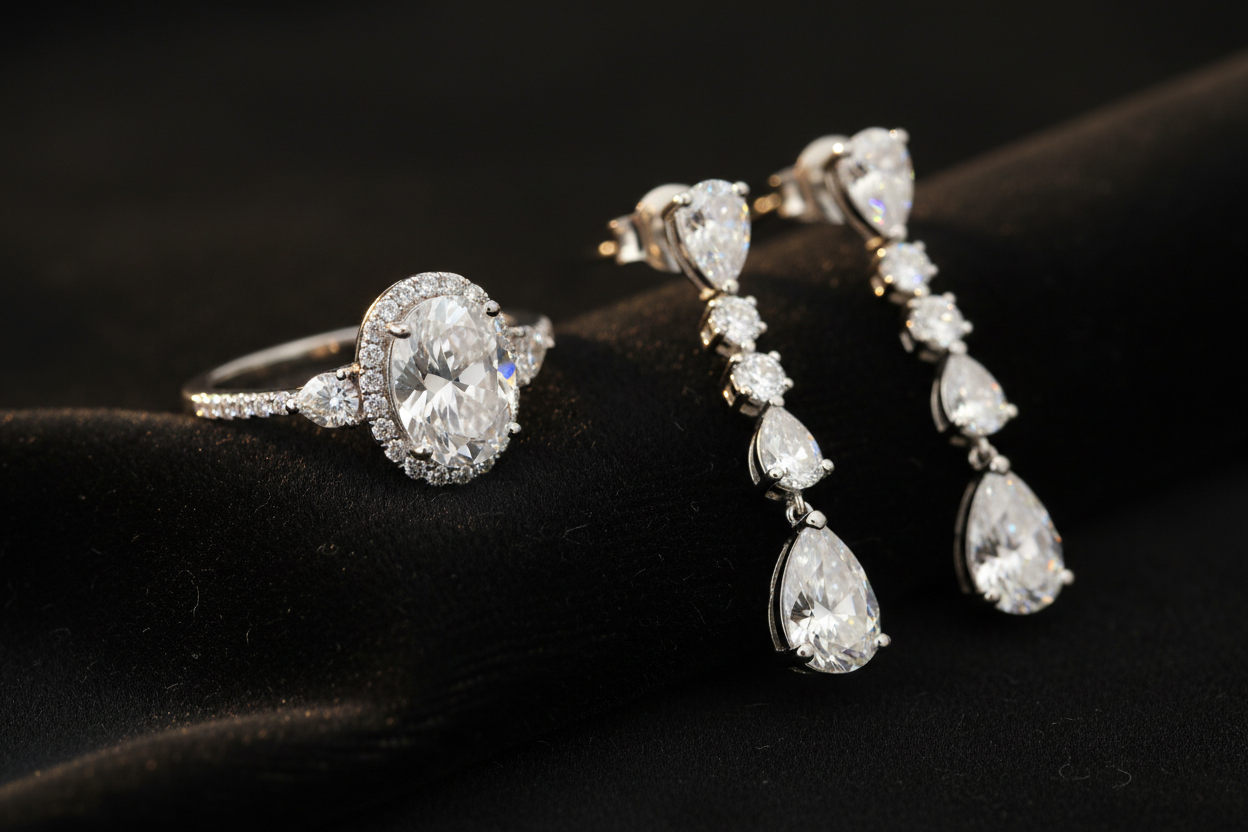
VVS moissanite is extremely resistant to water and common chemicals. Its hardness of 9.25 on the Mohs scale makes it practically immune to scratching and degradation from moisture. The weak point is not the stone — it is the silver setting that holds it. Therefore, the same precautions apply: avoid chlorine, salt, and aggressive chemicals.
When you can wear them without worry
Washing your hands, rain, sweating in summer, or showering with lukewarm water without aggressive products — all of these are perfectly compatible with wearing 925 silver jewelry. You don't need to take them off at every moment. Only in real risk contexts: swimming pool, sea, gym with a lot of sweat, and when applying cosmetic products directly to the area where you wear the jewelry.
How to restore shine if it has dulled
If your jewelry has lost its shine due to exposure to water or the environment, it is not damaged — only superficially oxidized. A dry microfiber cloth and a little baking soda paste with water (without rubbing hard) will restore the shine in minutes. For a professional result, a specific silver polishing cloth is the best investment you can make for your jewelry.
If you want to delve deeper into caring for your pieces, read our article on why silver oxidizes and how to prevent it or discover the care ritual that makes all the difference. And if you still don't have your 925 silver jewelry, explore our complete collection.